Category: Books

  • In college I first started reading self-help books. Classic stuff like Think and Grow Rich by Napoleon Hill and How to Win Friends and Influence People by Dale Carnegie. It was also during this time that I became a little obsessed with success. I still focus a lot on how to live a successful life but my definition of that success has changed a lot. Books like those, that celebrate the charismatic salesman, have remained popular for a century in large part because of how Americans find extroversion to be so appealing.
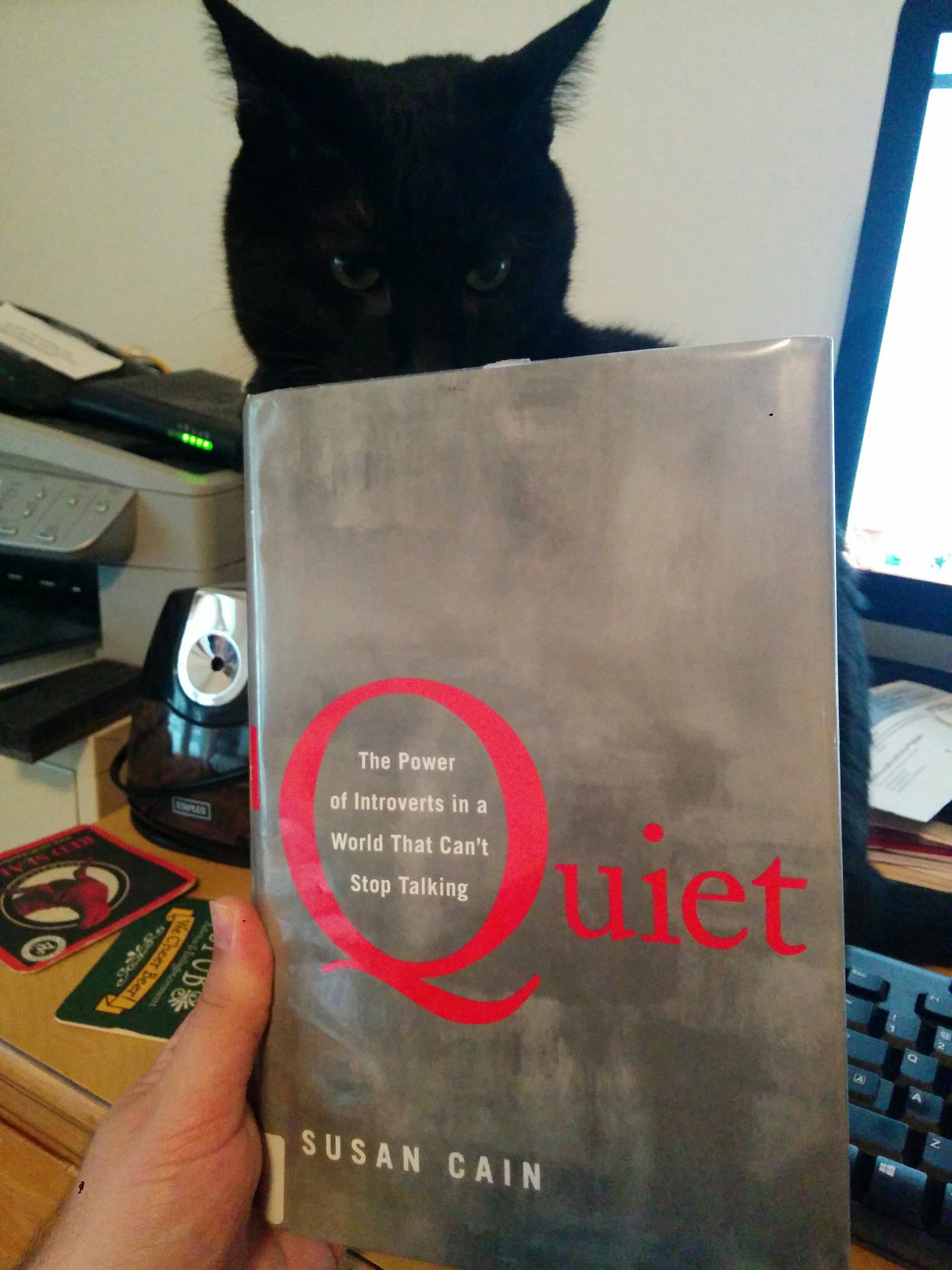
    Quiet in hardcover, with avid reader cat, Bagheera.
    Quiet, in hardcover with avid reader cat, Bagheera.

    Susan Cain sets out to advocate for the other side of the spectrum. Successful and valuable doesn’t need to be equated with extroversion. Being calm, contemplative, and working by oneself can (and has) lead to incredibly important decisions and actions that change the world. And being true to that introversion doesn’t need to leave you shy, scared, or anxious either.

    The extrovert versus introvert concept is one that I’ve always struggled with because I tend to identify myself as introverted, but I’ve done well in extroverted activities. When I was active in children’s theater my nickname was “Centerstage” because of a stunt I pulled stealing the center spotlight from the star one occasion. But after any amount of socializing, I definitely find myself needing to recharge on my own. I can’t problem solve with a group chattering away; I need to think it through myself. You definitely can’t count on me being creative with anyone else watching – that’s me time and mine alone. I might share later if I feel like it. 

    Quiet breaks down the idea of introversion better than any book or article I’d previously read. The science that’s currently available on the issue is covered, and we gain some great insights that help to explain how other introverts share similar experience to me. If I could’ve read the section of talking to the introvert at Harvard Business School while I was still doing my undergrad work at the University of Louisville Business School, I would’ve audibly said “Ah ha!”

    As we progress through the book, we start seeing some advice the introverts can take to the bank and not just the facts of introversion contrasted with extroversion. The result is that this book could be a self-help resources for the contemplative. Instead rushing our bodies with adrenaline to force away our quiet nature like typical motivational advice would suggest, we can use it to our advantage to better value ourselves. As we take full stock of our quiet times, we can find ourselves more effective in the situations that play more to extroversion. The company Christmas party is a lot more manageable when you have a good plan to have a strong interaction with one person instead of working the room. The sales call doesn’t have to be scary when you have hundreds of questions you’re prepared to honestly ask and discuss.

    My friend Paul refers to this book as “the introvert bible.” That’s about right. It’s a good offering that both praises and aids the introverted human. Between one-third and one-half of all people are introverts, so give it a read to better understand how you (or half of the people you meet) are experiencing the world around you.


    Quiet: The Power of Introverts in a World That Can’t Stop Talking by Susan Cain

    http://www.quietrev.com/quiet-the-book/

    Amazon ; Goodreads ; Wikipedia

  • Really enjoying Quiet: The Power of Introverts in a World That Can’t Stop Talking by Susan Cain. Book review coming next week (probably.)

    One thing I learned was the importance of monitoring and tweaking the amount of stimulation around me when I’m working. Little things like turning my music a little bit lower than usual and sitting in different ways that let me rest a little more solidly have made great impacts on how well I can focus while working from home.

    Most of my home office strategies have revolved around eliminating distractions. This idea of measuring things in terms of stimuli and response has helped more than my general efforts like “no video content before 3pm” or “email only twice a day.”

  • The Postmortal, in paperback, with Bagheera (an avid reader cat)
    The Postmortal, in paperback, with Bagheera (an avid reader cat)

    With a great premise and a recommendation from a trusted friend, I had high hopes for this book. In the near-future a ‘cure for aging’ is found and the world faces never-before-considered problems associated with rapid population growth. Kind of like the Torchwood series Miracle Day, except people still die. Murders and cancer still happen, but people just don’t get old. Liver problems hurt more than anything as every American goes into a giant binge of alcohol.

    This review has more spoilers than others of mine. Fair warning.

    (more…)

  • It’s good to hear from John Perry again. I missed his presence in The Ghost Brigades. But even better is to meet Jane Sagan again. After listening to “The Sagan Diary” I started to really appreciate her character and the decisions she made between book 2 and book 3. The Last Colony features Jane as a wonderful heroine instead of the stiff colleague she was in Ghost Brigades.

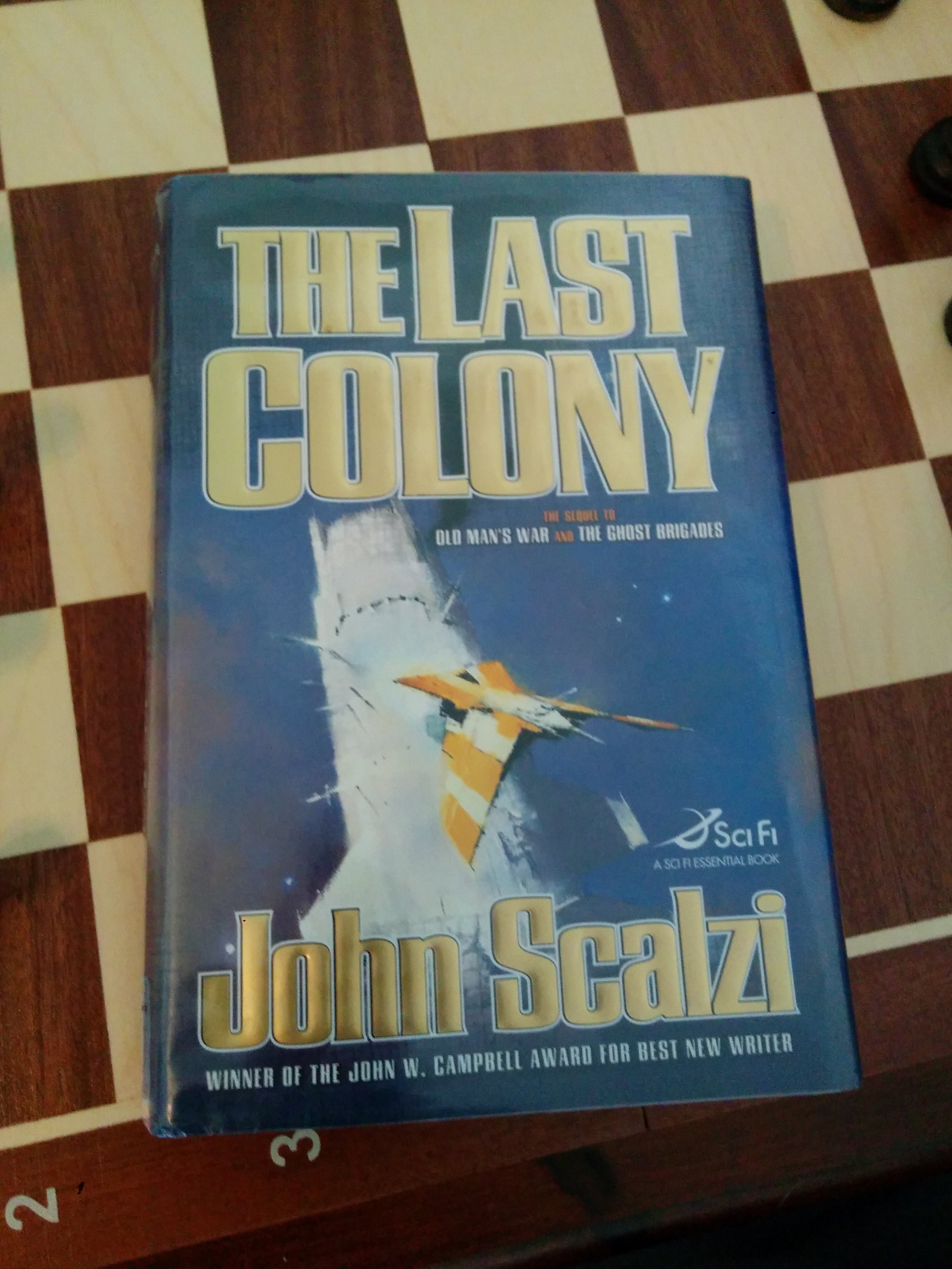
    The Last Colony by John Scalzi, hardcover, on a chess board
    The Last Colony by John Scalzi, hardcover, on a chess board

    I must admit I was a little worried at first. After the intense military themes I’ve been reading from Scalzi, a book on small-town colony politics seemed to be underwhelming. I should’ve known it wouldn’t stay in that mode for long.

    In the same style I loved from the other books, the twists and turns in the plot come out of grains of truth presented early on. But the effect they have on the circumstances are exponential. Every scene goes way beyond the facts presented. In the end, you’re left with a climax nothing short of “epic.”

    That being said, this seems like a good point to put the Old Man’s War universe on hold in my reading schedule. Scalzi thought so too (for his writing schedule) in the book’s acknowledgements. I have the benefit of knowing that three more books are out there, but I’ve several other books to hit in 2015. If I get in the mood for more Scalzi, I’ll probably take on Redshirts. Or perhaps one of his non-fiction books, You’re Not Fooling Anyone When You Take Your Laptop to a Coffee Shop.


    The Last Colony by John Scalzi

    Amazon ; Goodreads ; Wikipedia

    Read Scalzi’s blog at http://whatever.scalzi.com/

  • The Domino Project was a publishing experiment run by Seth Godin and Amazon.com back in 2011. They released several small books aimed at business readers. The book equivalent of a TED talk, they could be consumed quickly (about an hour) and had a mission of spreading ideas quickly. Occasionally Seth still publishes blog posts for Domino, but they haven’t released a book in some time.

    I mention it because I first heard of Steven Pressfield by reading Do the Work, a book he wrote for the Domino Project. Do the Work was really a lite version of The War of Art and I bought the Kindle edition of The War of Art shortly thereafter. In fact, they were so similar I never really went through The War of Art in its entirety. It sat in my Kindle account for 4 years being less than appreciated.

    The cover as seen on my Kindle App on my phone. When I bought this it was for my Kindle 3G, which has since died.
    The cover as seen on my Kindle App on my phone. When I bought this it was for my Kindle 3G, which has since died.

    It reads like a suite of blog posts categorized under “Resistance,” and “Turning Pro.” Pressfield is adamant that resistance is the reason your best work isn’t moving from your brain to the paper. Like spiritual warfare, the demons of resistance exist physically and promise you a better life if you’ll procrastinate, overanalyze, and fear doing your work.

    His cure is to recognize the Resistance as a tangible force so that you don’t let it claim you. You can treat it as antagonist to your life’s story instead of a part of your own being. By separating yourself from the Resistance, you can defeat it. And you can keep it on the run by Turning Pro. He doesn’t mean professional like being a doctor or lawyer, rather he means not being an amateur.

    The amateur plays for fun. The professional plays for keeps.   To the amateur, the game is his avocation. To the pro it’s his vocation.   The amateur plays part-time, the professional full-time.   The amateur is a weekend warrior. The professional is there seven days a week.

    Pressfield, Steven (2010-10-11). The War Of Art: Winning the Inner Creative Battle (p. 62). FastPencil PREMIERE. Kindle Edition.

    Most importantly, the amateur falls to their Resistance. The professional does whatever takes to beat it.

    The book is timely for me. I’ve written about my battles with procrastination before and I’m now planning a workshop for colleagues that falls right in line with defeating resistance. Between that connection to the material and Pressfield’s direct writing style, I excitedly finished this book in 3 days. It took longer to write this post.

    Do yourself a favor and read the book. More importantly do yourself a favor and put in a few professional hours to that work you’ve been delaying. Steven would agree, I think.


    The War of Art by Steven Pressfield

    Amazon ; Goodreads ; Wikipedia

    The War of Art

  • I read Steven Pressfield’s War of Art faster than any other book this year. My review isn’t ready yet (next week, maybe?) but I wanted to share this snippet.

    Like a magnetized needle floating on a surface of oil, Resistance will unfailingly point to true North—meaning that calling or action it most wants to stop us from doing.

    We can use this. We can use it as a compass. We can navigate by Resistance, letting it guide us to that calling or action that we must follow before all others.

    Rule of thumb: The more important a call or action is to our soul’s evolution, the more Resistance we will feel toward pursuing it.

    Pressfield, Steven (2010-10-11). The War Of Art: Winning the Inner Creative Battle (p. 12). FastPencil PREMIERE. Kindle Edition.

    I like this idea that once we acknowledge resistance for what it is, we can use it. There’s no getting rid of the anxiety that comes with great work, great art. But there is such a thing as using it as a tool for our team instead of its own evil desires.

  • I just recently started The Last Colony, the third book in John Scalzi’s Old Man’s War universe. If you didn’t know, I loved the first two books.

    Detailing events that take place between The Ghost Brigades and The Last Colony, Scalzi also wrote a novella called The Sagan Diary. He enlisted several friends to create an audio version, which is available on his blog:

    The Sagan Diary: The Audio Version on John Scalzi’s blog “Whatever”

    I listened to it on Wednesday and thoroughly enjoyed it. The last chapter brought a tear to my eye. I preferred some actresses’ reading over the others, but I thought it was a unique way to present the work.

    You probably won’t like it if you haven’t read the first two books, just FYI. But you were going to read them anyway, right? Do it.

  • Business non-fiction is one of my favorite pastimes. Reading the advice of successful people always feels like time well spent. Taking People With You leaves me with a great respect for David Novak, the Executive Chairman of YUM! brands here in Louisville. He was CEO at the time of the book’s publication. It’s a public version of the leadership training Novak has taught to the many franchisees and company leaders for Yum and PepsiCo over the years.

    Hardcover of Taking People With You by David Novak
    Hardcover of Taking People With You by David Novak

    In particular, I really enjoy Novak’s third section on following-through on goal settings and properly measuring and rewarding your employees. It actually made me look at the tools we use at Automattic and think “hey, we’re totally doing this right,” because we gather so much data on everything we do. It’s refreshing to read advice and realize your company is totally living it.

    The first section of the book is a little fluffy. One of my least favorite things in the business genre is how so many authors tell you to ‘use this book’ a certain way. In my opinion, if you can’t find value in a 200 page book reading it cover-to-cover, it’s not a good book. This was enjoyable, so I don’t accuse Novak of having a poor product, rather I wish he’d ditch the pretense of ‘read only one chapter a day maixmum’ or ‘use this as a workbook.’ Stand by your ideas as just that – ideas – and they’ll hold up a lot better.

    Similarly, lots of Novak’s examples fall into the trap of an executive presenting himself as the main character of a narrative. Realistically a lot of people were surely involved by committee, by meeting, and certainly implementation for many of the examples and stories presented. Leadership is why we’re reading the book, but it takes a lot more than the CEO saying ‘we should have Wing Wednesday’ in one meeting to make Wing Wednesday happen and all those little actions don’t really get mentioned.

    But Novak offers great arguments for some specific tactics Leaders should be using:

    • When beginning a new undertaking, think through your strategy, then its structure, then the culture that can make it happen.
    • Reward people in an interesting and notable way
    • Be an avid learner and seek out all the information you can from all the people you can
    • When creating a change, also learn and decide how to market the change within your team
    • Change is never over and improvements will always lead to new improvements

    It’s a quick read and one I’d recommend for folks interested in leading business teams. Novak definitely speaks with a ‘corporate’ voice which I’ve become less accustomed to since delving so much about the tech industry, but it actually grew on me. Maybe it’s that Louisville charm. 🙂

    Don’t take my word for it, Warren Buffett endorses Novak and the book as well:

    David Novak is the best at leadership, whether teaching it in this book or practicing it.

    Buffett and Novak have lunch at KFC once a year, apparently. Now that’s a lunch I’d like to join one day.

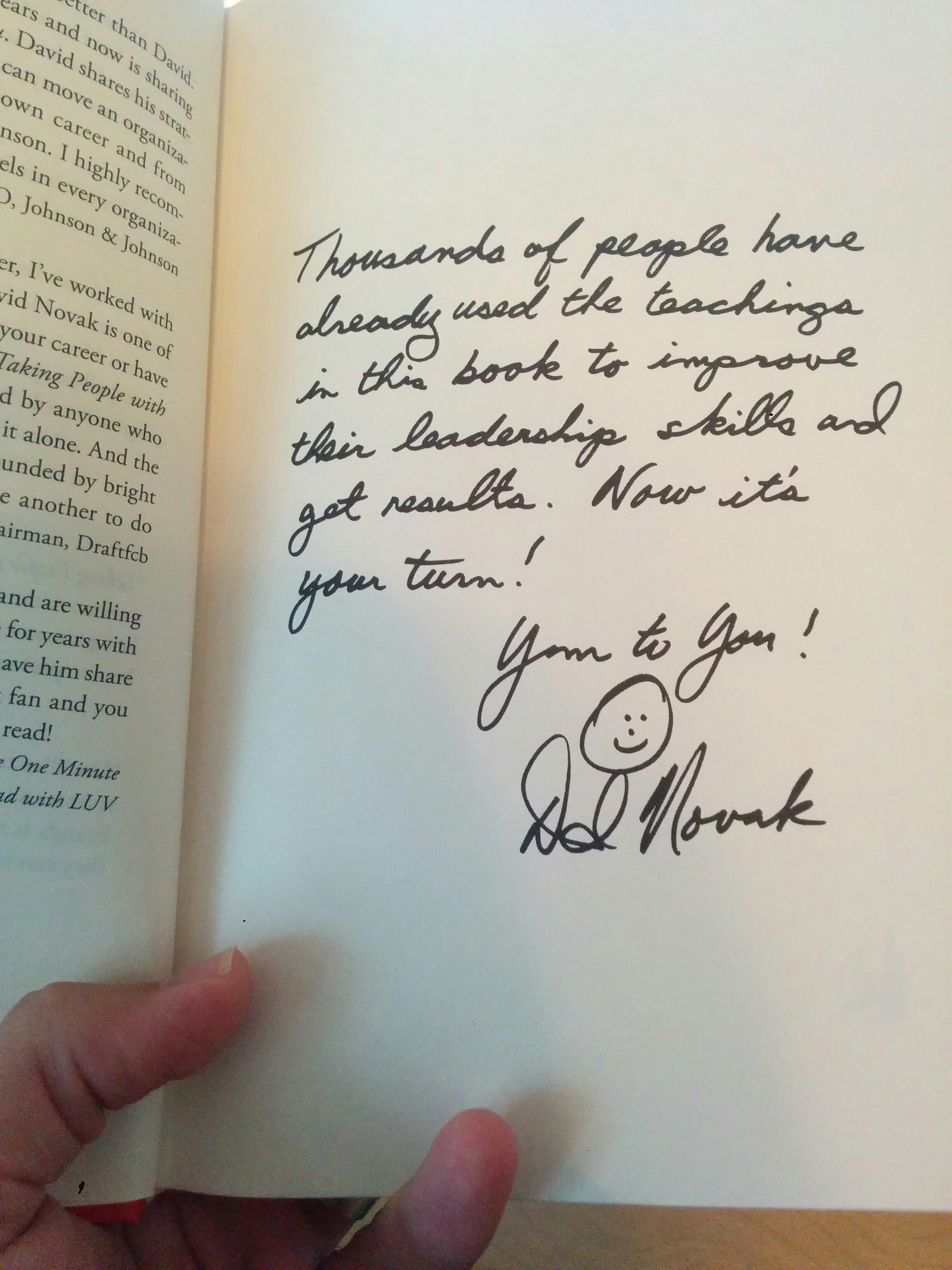
    Thanks to my mother-in-law, Dana, for recommending the book and loaning me her copy of it. She had the pleasure of meeting Mr. Novak and receiving a signed copy. “Yum to you!” is a pretty great inscription.

    David Novak signed this copy of Taking People With You
    David Novak signed this copy of Taking People With You

    Taking People with You: The Only Way to Make BIG Things Happen by David Novak

    Amazon ; Goodreads ; Wikipedia

    www.takingpeoplewithyou.com

  • I enjoyed Old Man’s War so much, I immediately requested the sequel from my local library. The Ghost Brigades did not disappoint. And while so many franchises will rely on its charismatic main character, Scalzi didn’t feel the need to do so – it’s a credit to the wonderful universe he’s created. We take on this adventure from a new perspective, that of the CDF’s Special Forces – often called ‘The Ghost Brigades’ by the rest of the military. I would’ve been perfectly happy to read more about John Perry, but pleasantly surprised to see he only had to be barely mentioned to keep the two books tied together.

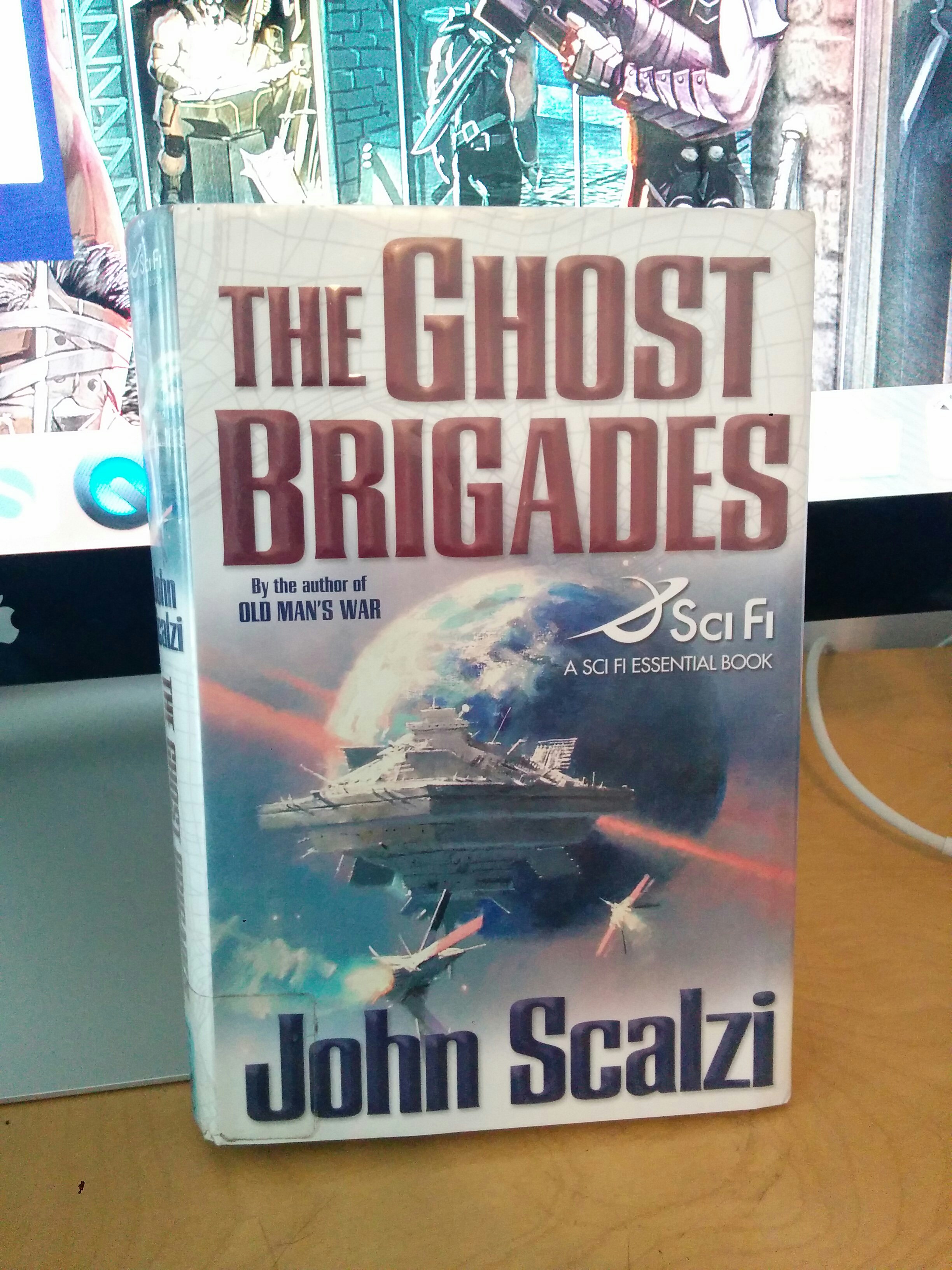
    Hardcover edition of The Ghost Bridages by John Scalzi, on loan from the Louisville Free Public Library
    Hardcover edition of The Ghost Bridages by John Scalzi, on loan from the Louisville Free Public Library

    What is the same is the great formula of storytelling. The narrative has just the right amount of foreshadowing, rising and falling action, and explosion-fueled climax. You’ll guess what’s coming, and have a joyous “a ha!” when you realize you didn’t see it coming.

    The characters of this book are oddly more appealing to me than they were in Old Man’s War. The 2nd Platoon seemed a lot more relatable than the ‘Old Farts.’ Maybe that’s just a testament to how young I actually am.

    If you enjoy science fiction or military fiction and aren’t caught up on Scalzi, holy cow, now is the time to join me. I don’t want to give away any plot here because it’s just too enjoyable. You may have noticed my pace of reading this year — and how I’ve done a lot more in June than in the earlier parts of the year. John Scalzi earns the credit for that.

    Seriously. A fan, I have become. Book 3 is on request already! I’m gonna try to squeeze in some non-fiction quickly while I wait.


    The Ghost Brigades by John Scalzi

    Amazon ; Goodreads ; Wikipedia

  • “Turns out Neil Gaiman accidentally wrote Harry Potter in 1990.”

    That’s how my friend Peter introduced this comic book mini-series to me. I’ve never really been into comic books, but occasionally I feel like I should be. Peter is my best enabler on that front. He recommends to me the ‘what you should read next’ and I usually get around to it eventually. For The Books of Magic, he just brought his copy to my house one day before a round of Ingress, made that quip about Harry Potter, and let me do the rest.

    Yo-yo was my favorite character
    Yo-yo was my favorite character

    Once I actually picked it up, I really enjoyed it. The art is a bit trippy and the story even moreso. But it has the arc of an epic poem, or an opera, or something much larger than itself, shoved into 200 short pages. Your mind can fill in any blanks with additional moments of wonder if you like. I read it before bed, mostly, so it lead to the occasional interesting dreams.

    Most importantly the story of Tim Hunter seems to lead to each reader assessing their own morality and judgment. Is learning that magic is real all that different than learning anything else? The world around us works different than we understand it, otherwise we’d be experts by now. But the learning we undergo speaks nothing to the future it will provide. Just as Tim’s mentors don’t know exactly how their teaching will shake out either.

    Not sure I’m so engaged with it to seek out the ‘volume two’ of comics that came out from 1994 – 2000… but if Peter throws some at me I wouldn’t turn them down.


    The Books of Magic by Neil Gaiman

    Amazon ; Goodreads ; Wikipedia