Category: Books

  • A defining moment of my life thusfar has been discovering this book, A Guide to the Good Life: The Ancient Art of Stoic Joy by William B. Irvine.

    The discovery of this changed a lot of my thinking, because up to that point I had been confused as to my life’s goal. Religion and its purpose of service to God was important to my youth, but this really drifted away in college. I found some role models who were clearly  Christian Hedonists (in hindsight) and I drifted away from them too.

    Starting to think for myself, I found the swedish idea of ‘lagom‘ and began to think my life was really the pursuit of moderation, or balance. But this seemed to be more helpful as a mechanic, or detail, not really fulfilling as a life’s goal. Reading Irvine’s book, I learned that the stoic sage pursues virtue above all else. Seneca teaches that ‘virtue is sufficient for happiness’ and the sage, full of virtue, then feels no misfortune.

    Penelope, bronze by Emile-Antoine Bourdelle
    Penelope, bronze by Emile-Antoine Bourdelle

    By no means am I a stoic sage. More and more I think no ever has been or will be. But this pursuit of virtue has certainly treated me well. Feeling less anger helps me soothe the anger in others. The act of negative visualization helps me focus on important priorities and resolve grief. Desiring less helps you save more.

    The difficulties I face most are when the pursuit of virtue turns into fits of guilt. My terrible habits of procrastination feed this even more. When I fail in a daily exercise, I often feel like I fail in my entire philosophy of life. But these feelings are temporary, and they help you continue with greater strength in the future.

    Most importantly, this pursuit has shaped my philosophy of life. How I think I should handle a given day, problem, or question is no longer vaguely determined but is instead set against a set of principles I truly believe. I’ve chosen to believe in principles that make the world better and myself a better person in it.

  • My friend Will, the same guy who recommended Hyperion and The Fall of Hyperion to me, told me to read Old Man’s War at about the same time. I had read the Amazon Kindle sample of Red Shirts a while back, and seen Scalzi on the Forbidden Island episode of Tabletop, but that’s all I really knew about the guy. I should’ve known that a friend of Wil Wheaton’s is a friend of mine.

    This book barely left my hands. Every chapter left me wanting more and I kept telling Ber, “I freakin’ love this book,” every time I reluctantly set it down. The writing resonated with me and the plot was perfectly laid out. It had me making guesses and gasping at the real resolutions.

    Science fiction often involves of bit of speculation into future technology. Old Man’s War provides this through well contextualized dialogue, instead of forcing the read through narrative ‘rules’ of its universe. It helps that almost every character we meet is going through a phase of exploration, so we learn what they learn. If we don’t understand it’s okay, because they don’t understand it either. We probably ‘don’t have the math for it’ anyway. 😉

    The novel also involves quite of a bit of war-time combat which normally isn’t my thing. But I didn’t find myself skimming through the descriptions at all in this book. A big factor in this was that every battle was also involved new techniques of fighting and different strategies. Aliens don’t fight the same way every battle like human armies do. In particular, a scene with ritualist one-on-one combat during a diplomatic session had me holding my breath. So, so good.

    A great book and a great blog from the same author
    A great book and a great blog from the same author

    When I was reading the book, I was looking up stuff about John. He recently scored a major deal with his publisher, and this quote from a New York Times article seemed appropriate to my discovery of this talented author:

    Patrick Nielsen Hayden, the executive editor for Tor, said the decision was an easy one. While Mr. Scalzi has never had a “No. 1 best seller,” he said, “he backlists like crazy.”

    “One of the reactions of people reading a John Scalzi novel is that people go out and buy all the other Scalzi novels,” Mr. Nielsen Hayden said.

    And that’s about right. I’ve already added this series’ sequel, The Ghost Brigades, to the last spot on my 2015 reading list and reserved it from my local library. Any books I don’t really get into on my list will quickly be replaced by another Scalzi novel.

    Icing on the cake? Scalzi uses WordPress.com. Read his blog at whatever.scalzi.com.

    Mr. Scalzi, you’ve won yourself a fan.


    Old Man’s War by John Scalzi

    Amazon ; Goodreads ; Wikipedia

  • The book is far less intriguing than the real-world game that stems from it. It’s clearly created in the same thinking of young adult thrillers like Hunger Games and The Maze Runner. That’s not inherently a bad thing, but the book is so blandly following that formula that I really couldn’t care less about what happens to any of the characters.

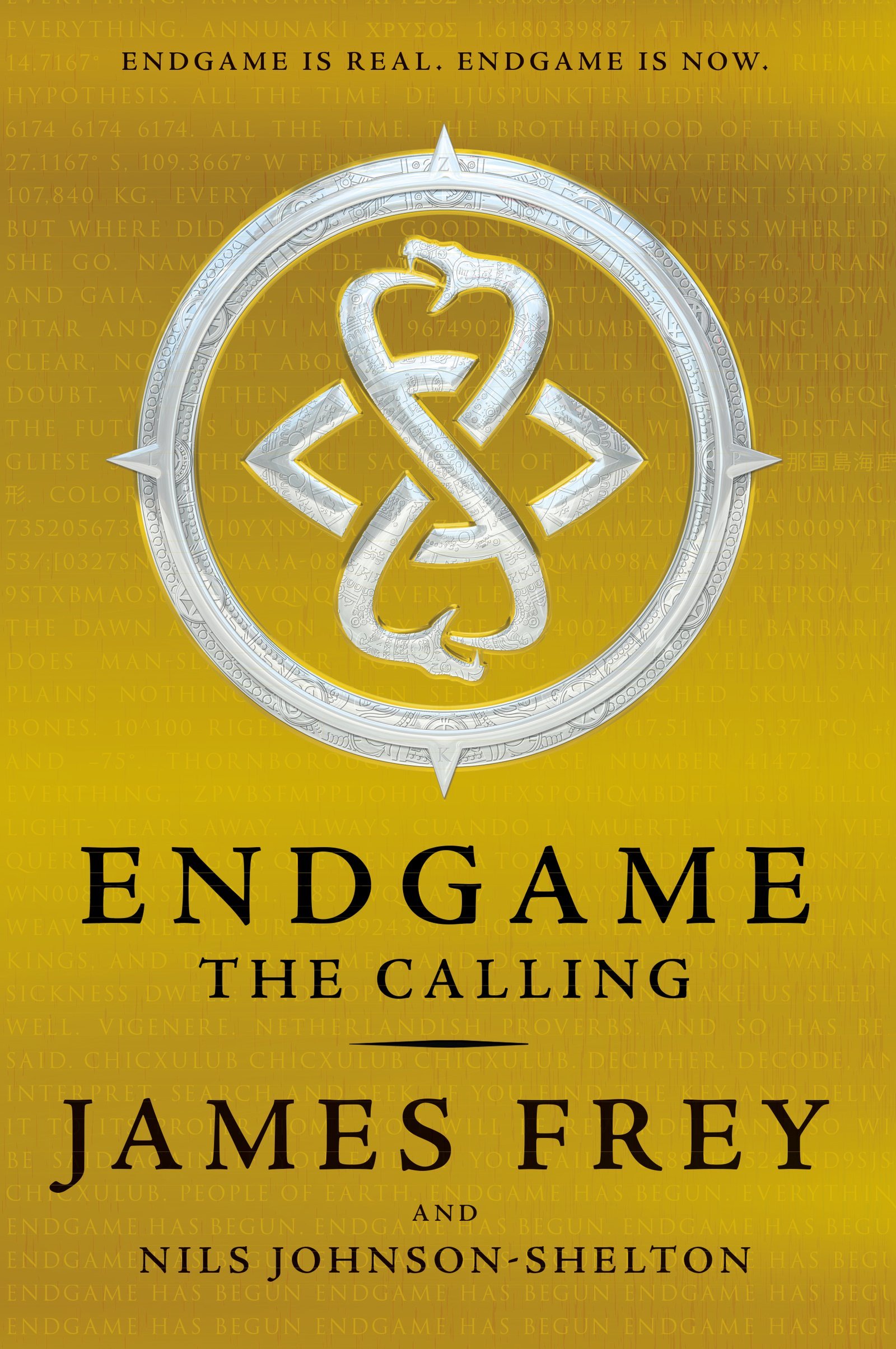
    The cover is niftier than its lack of substance.
    The cover is niftier than its lack of substance.

    When a particular character died it was meant to be a pretty emotional moment in the story’s arc, but I really only felt glee that it might force one of the leads to become the slightest bit interesting. Every sympathetic character is also incredibly static. We have lots of well-trained hard-edged kids put in a tough situation… and they all stay exactly the same. Snooze.

    The only reason I picked up this book is because it’s a project of Niantic Labs. These are the same folks who make the Ingress game I’m so in love with. Ingress and Endgame aren’t really connected, they’re just two different projects from Niantic. But I love one, so I figured I’d give the other a try. And the bit that doesn’t disappoint? The augmented reality outside of the book.

    You see, there’s some ‘Endgame Gold’ being held at Caesar’s Palace in Las Vegas. You can see it in person, or check out the live stream at EndgameGold.com. The gold coins are worth $500,000 and there’s a global contest happening right now in the real world to win it. How do you win? You read this book, decipher the clues within it, and find the key to the case.

    If nobody figures out the puzzle(s) and claims the gold by October 7th, 2016, the contest will end. Full rules for the game are at EndgameRules.com.

    I find that pretty damn intriguing, even if it is just a publicity stunt. But I really wouldn’t know where to begin with the clues (and red herrings) found in the book. There’s got to be hundreds of pieces of information included that may help you figure out the puzzle or lead you down a rabbit hole. I’m not intrigued enough to take up cryptology as a hobby, but it was enough to get me to buy the book for $4 used.

    There’s more books coming, and probably a movie and junk too. I don’t really care. You can play some other games in the Endgame universe that will shape the story of the upcoming books… but you can’t make dull characters interesting without change, and this story refuses to make that choice.


    Endgame: The Calling by James Frey
    Amazon ; Goodreads ; Wikipedia

  • If you’ve had a long sit-down with me, you may know that I didn’t have a good experience with college. Most of it was spent being angry; neither appreciating the work I was doing nor pushing to do the work I cared about in the little spare time I had available to me. It’s a first-world problem, but it was my problem.

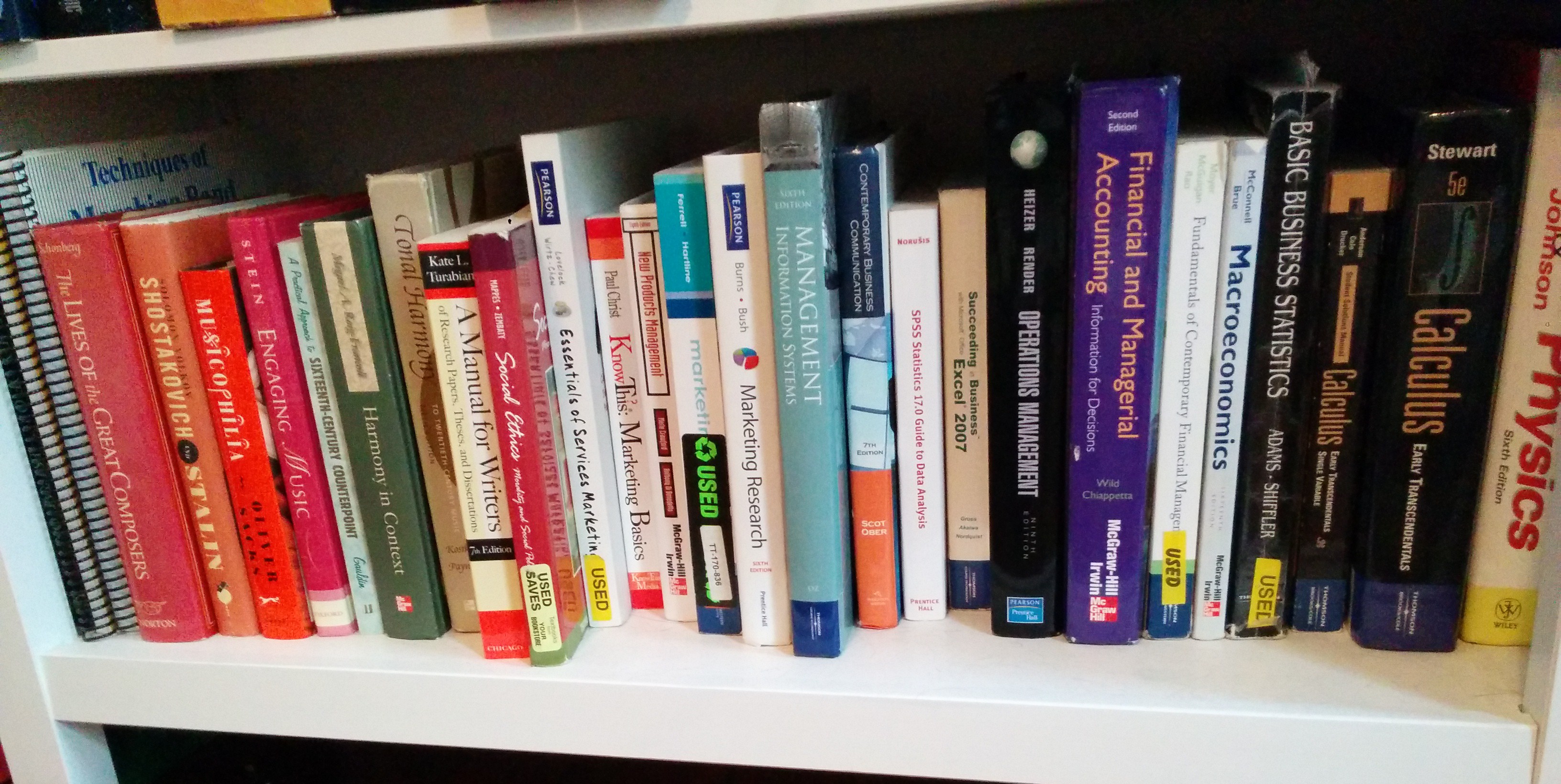
    Anyway, one of the side effects of that time is that I was left with a stack of textbooks that I didn’t want to lose. I really do want to learn more calculus, physics, and philosophy, even though neither my music or business school studies left much time to pursue them beyond entry-level courses. There are economic questions I still don’t understand, but those books I saved may have more answers than my professors made it seem.

    One of the things I took from college was that even if the courses weren’t very educational for me, the books were actually helpful. Or at least the content of the books. You see, the books don’t really get opened since I left school. At all. They seem to have reached their end on my bottom bookshelf.

    The Bottom Bookshelf
    The Bottom Bookshelf

    This isn’t to say I’ve stopped learning. No, I’ve actually learned a whole lot of stuff in the last four years. But the books I’ve bought since tend to get read, thought about, and then sold to half-price book stores or given away to friends. The textbooks for some reason never met that fate.

    I think I’m stuck feeling guilty that these are what I should’ve done for those many months in college. If I give these away or sell them, I’m missing out on the good part of that time in my life. Will I never learn calculus if I bring this to Goodwill?

    The reality is, this information is out there in other places. And almost assuredly in electronic formats where I can store them, travel with them, and access them more easily in my daily life instead of wrangling a tome.

    So what’s the problem?

    We have too much stuff in our house. That’s the problem.

    We’re slowly but surely getting rid of that stuff, but this is one of those barriers that’s totally my fault. To most folks, this shelf of books is not a problem at all. I very much respect those that keep books in such high esteem as to make habits of building libraries of their own keeping. Reading The Black Swan and learning about Umberto Eco’s library of books he’s not read made me feel like I was actually right to want this bottom shelf of mine. Or perhaps wrong for not building it up more.

    But it’s just not me. I have no logical desires to keep these books. I have desires for a simpler home and a clearer set of priorities. Some of my possessions that I knowingly want or need don’t have a ‘home’ right now, and they deserve this shelf more than objects of past shame.

    My plan

    I’ve set a date. I’m going to glance through each book. Pick one thing from the book that I really want to learn about (or tried to learn and still don’t ‘get’) and stick the idea in Simplenote. In less than an hour, I should have a list of stuff I really want to learn about that would’ve been in those books, but I know I can find in plenty of places.

    It’ll probably take me years to even whittle down those Simplenotes.

    But I’ll get my shelf back, and maybe I can start to feel better about this whole learning business. Maybe someone else will enjoy these books as much as I found myself anxious about them.

  • When you need to teach or explain an idea, you may find greater success by using examples, imagery, and stories rather than defining the idea explicitly. It’s easy to fall into the trap of wanting to be right – using just the right words to make everything accurate. While correct, those words may be lost on their audience. Better to meet them where they are, then clear up misconceptions later.

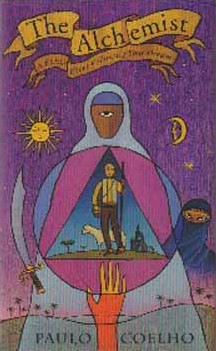
    TheAlchemist

    In The Alchemist, we learn from stories within stories. Paulo Coelho doesn’t presume to know where you are in your life (to meet you there,) so we instead watch Santiago, the young shepherd, learn to make his life fit his Personal Legend. The morals still ring true – keeping focus on your true goal, preparing yourself for hardship, and responding to the forces that are more powerful than you.

    The books leaves you feeling uplifted: Go forth, and live knowing your own Personal Legend is out there. And it doesn’t waste your time telling you what that legend should be – only warns that plenty of others have missed their opportunities through their own pessimism.

    It’s a quick read, and I enjoyed it — reading the whole thing on a flight from Portland, Oregon to Chicago, Illinois. I never put it down and was excited to find out what happened to Santiago. But when it comes to personal reflection, I’m left feeling like I’ve learned the lessons the book teaches. I see parallels to some Santiago’s situations and my past. And I see treasure in my future. But where I do still fail is remembering that one can always lose track — and perhaps my greatest challenges are still ahead of me.

    In terms of feel, I can’t help but compare The Alchemist to The Richest Man in Babylon by George S. Clayson. I actually felt more of a ‘lightbulb’ reading the advice on life and money in that book than I did from the Alchemist, but both do a great job of helping you contemplate the struggles and victories humans face using parable and imagery. You should probably read both and tell me if you think they feel the same too.

    I picked this book for my 2015 reading list because it is one of Maureen’s favorites. She’s a fellow Automattician, and several other books I’m reading this year came from co-workers favorite books.


    The Alchemist by Paulo Coelho
    Amazon ; Goodreads ; Wikipedia

  • A fail for 2015. I’m tapping out on the book The Call of Cthulu and Other Weird Stories.

    The tough thing is that of what I read, I really did enjoy. It creeped me out in a good way. In particular, I told like 500 people they need to read the story “The Picture in the House.” I think you should read it too.

    But my goal for 2015 was all about reading more, and this book was so heavy it did not inspire me to read more. For over a month, it has sat on my bedside unread. I’ll add another book to my list to make up for it.

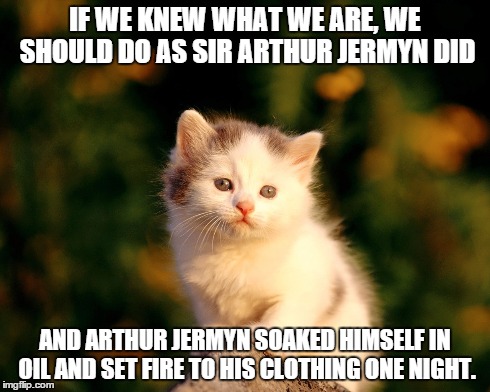
    While reading this book, a friend also made me aware of the blog H.P. Lovecat on tumblr. This image is actually from one the stories:

    H.P. Lovecat


    The Call of Cthulhu and Other Weird Stories by H.P. Lovecraft

    Amazon ; Goodreads ; Wikipedia

  • Let’s begin with my favorite quote from the book:

    [Careful/
    Keats/
    thinking may become a habit]

    Cynical A.I.s get me every time. 🙂

    I loved every second of Hyperion, and the only note of disappointment I have with it was how unresolved it was at its end. Thankfully I’m a lucky reader who knew full well more content was to follow. I pity the science fiction fans of 1989 who had to wait for this sequel to become available. I have to say the only note of disappointment I have with The Fall of Hyperion is that it abandons the story-telling, Canterbury Tales-esque flow of the first book. It does so pretty mostly out of necessity (we heard the stories in the first book) but it does put a strain on the many different scenes which we experience.

    Instead we gain a new narrator and with it new insights on what’s happening in the rest of the universe while the pilgrims continue their struggles on the planet Hyperion. Coming to fore are tensions between the TechnoCore and the human race — something that only briefly came to light in the first novel. I don’t want to reveal too much, but let’s just say it freaks me out to think about AIs evolving into the powerful society that Simmons creates.

    Most importantly, The Fall of Hyperion does have some resolution with its end. It leaves you wanting more, but in the sense you can expect from any story. A friend once told me, before I started book one, that what got published as two books was actually written as a single Hyperion work, but I can’t find any links online that corroborate that. Pass it on to me if you have one. 🙂

    So I reach a question: I have empty slots on my reading list for the year — do I add the remaining two books from the Hyperion Cantos? The answer: not yet, but I’ll keep it in mind. I enjoyed the story, but didn’t feel particularly attached to Simmons writing and finally feel like I’ve experienced the Hyperion universe, over 1000 pages later. I’d recommend for anyone who likes Sci-Fi though.


    The Fall of Hyperion by Dan Simmons

    Amazon ; Goodreads ; Wikipedia

  • When I started reading this book, I didn’t think I’d have to be smart to talk about it. Turns out, you kinda have to be smart to talk about this book — at least to do so without being called an idiot by its author, Nassim Nicholas Taleb (also known as NNT). But then, he’s likely to call you an idiot regardless. Before I even started reading the book, a twitter friend even mentioned it:

    He’s calls lots of people morons, stupid, unintelligent, and the like throughout the book. I’m not one to say he’s wrong, and perhaps I should count it a blessing that I don’t have dealings with too many people of great power.

    But honestly reading the book made me feel less stupid. Mostly because with my small exposure to statistics in business school, I felt like an underlying question I had was always ignored:

    The models you’re teaching us assume that we understand the system in which we’re using it — what do we use if something happens from outside our assumptions?

    I would be dismissed as if I was asking an illogical, purposeless question. My question would not at all help me compute the homework being assigned to me that night. But now I understand that’s a question almost all experts refuse to grant any consideration, and that made me enjoy the book throughly. In particular, I liked story in Chapter 9 where NNT explains how the probability found in casino game (dice/card/roulette) is not at all the randomness he works with. All those probabilities are understood, and in the context of a Casino are controlled to the house advantage (so long as the Whales are kept at bay from large bets at the right time using Maximum Bets) and by risk management to spoil cheaters. But the real Black Swans for the casino ended up being when a tiger attacked a main stage performer, when a contractor was hurt during new construction, and when a corporate drone completely forgot to file a very important document with the IRS. All of these are far less predictable, and far more hurtful to the casino’s business than a card-counter playing Black Jack. But how does one mitigate such things?

    NNT describes his Black Swan problem — when events that are both improbable and unknown cause massive consequences — but also the important Turkey problem. If you are a turkey living with a farmer, and are fed well everyday for 999 days, what do you expect to happen on day 1000? The answer is obvious to one with the wisdom of the farmer, that not only will he not be fed, but he will meet his end. If not on day 1000, most certainly at another day in the future. And the exact day doesn’t really matter, nor change that certainty. But to the Turkey, day 1000 was a Black Swan. How could he have ever predicted something so beyond the realm of his knowledge?

    Don’t be the turkey. Don’t be a sukka. (I love that NNT uses that term like my favorite blogger Mr. Money Mustache does.) Understand that randomness is bound to impact your life at grand scales.

    What you won’t find in this book are the fantastical 10-simple-steps-you-can-take-right-now-to-win that so many other “thinking books” try to leave with the reader. No one has them, and Taleb at least has the guts to say he can’t predict the Black Swans any better than you or I could. The only difference is that he’s slightly less shocked when they come. In some aspects of life… that negative knowledge can be rather useful.

    I recommend the book. I’m not smart enough to do it justice or talk about it. I’d like to think I’m smart enough to say I don’t know plenty of other things too.


    The Black Swan: The Impact of the Highly Improbable by Nassim Nicholas Taleb

    Amazon ; Goodreads ; Wikipedia

  • Amber wrote on her blog about how we both see ourselves as readers, but when you look at how many books we’ve read this year– we’re not really readers. We just see ourselves that way and we should better strive to meet that expectation.

    I’m pledging to finish 15 books between now and the end of 2015. I’ve already begun books one and two, so I figure if I get both of those done, plus one book a month next year, plus one more (somehow) in there — I’m doing pretty good. To most readers, that’s a ridiculously low number. I don’t care. This is ambitious for me.

    Here’s my book list of what I want to read in that time. If you have suggestions to fill out remaining spots, please leave in the comments otherwise I’ll figure this out as we go along. I also reserve the right to remove a book if I start it and really don’t get into it, so long as I replace it with another book.

    If I get any books for Christmas I’ll probably sub those in too. 🙂 (Edit: I did, and I have.)

    1. The Black Swan: The Impact of the Highly Improbable by Nassim Nicholas Taleb
    2. The Fall of Hyperion by Dan Simmons
    3. The Call of Cthulhu and Other Weird Stories by H.P. Lovecraft
    4. The Alchemist by Paulo Coelho
    5. Endgame: The Calling by James Frey and Nils Johnson-Shelton
    6. Old Man’s War by John Scalzi
    7. The Books of Magic by Neil Gaiman (late addition)
    8. The Ghost Brigades by John Scalzi
    9. Taking People With You: The Only Way to Make BIG Things Happen by David Novak
    10. The War of Art: Break Through the Blocks and Win Your Inner Creative Battles by Steven Pressfield
    11. The Last Colony by John Scalzi (late addition)
    12. The Postmortal by Drew Magary (late addition)
    13. Quiet: The Power of Introverts in a World That Can’t Stop Talking by Susan Cain
    14. You’re Never Weird on the Internet (Almost) by Felicia Day (late addition)
    15. Zero to One: Notes on Startups, or How to Build the Future by Peter Thiel
    16. Mint Juleps with Teddy Roosevelt: The Complete History of Presidential Drinking by Mark Will-Weber
    17. Work Rules!: Insights from Inside Google That Will Transform How You Live and Lead by Laszlo Bock (late addition)
    18. Art Before Breakfast by Danny Gregory (late addition)
    19. The Martian by Andy Weir (late addition)
    20. Dune by Frank Herbert (read in 2016)
    21. The Name of the Wind by Patrick Rothfuss (late addition | read in 2016)
    22. American Gods by Neil Gaiman
    23. CivilWarLand in Bad Decline by George Saunders
    24. The Icarus Deception: How High Will You Fly? by Seth Godin (read in 2017)